French
  English
  German
  Spanish
  Italian
  Russian
  Arabic
  Korean
  Japanese
  Dutch
Dutch  Danish
  Norwegian
  Portuguese
  Turkish
  Czech
Czech  Lithuanian
  Polish
  Slovenian

Études de cas
- Accueil
- Études de cas
- TPE Dispensing Valve for Sauce Flip-Top Caps
Sourcing TPE Valves for Ketchup and Mayonnaise Caps: A B2B Supplier Evaluation Case Study
Table des matières
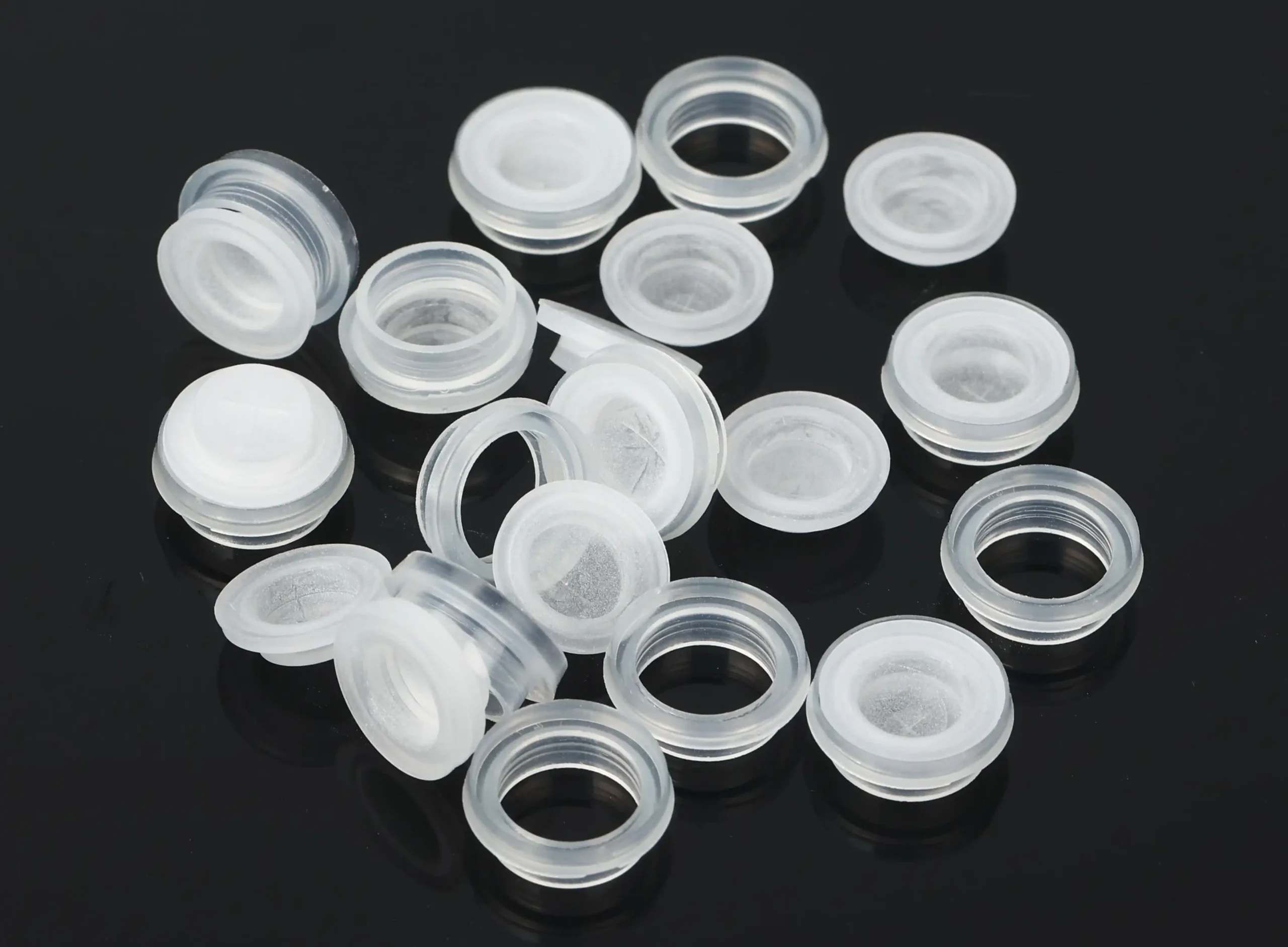
A ketchup cap and a shampoo cap look similar from across the room, but the valve inside them does very different work. Sauce products carry weight, texture, and sometimes small particles like herbs or seeds. A Valve de distribution TPE built for this job has to handle thicker flow, resist staining, and still snap shut cleanly after thousands of squeezes. For closure manufacturers sourcing this part for the first time, the decision involves more than picking a size off a catalog page.
Why Sauce Caps Need a Different Valve Than Shampoo or Lotion Caps
Ketchup and mayonnaise behave nothing like shampoo. They are heavier, thicker, and often contain small solid particles. A valve designed for lotion may open too easily under this kind of load and drip on the table. A valve built for sauce needs a firmer slit, thicker wall, and a stronger closing force so the product stays put between uses.
Temperature also plays a role here. Sauces get stored in kitchens, sometimes near a stove or in direct sunlight through a window. TPE holds its shape reasonably well across a wider temperature range than some softer materials, which matters when a bottle sits on a counter all summer.
TPE vs Silicone: Which Material Fits High-Volume Sauce Dispensing?
Buyers comparing a TPE valve for sauce cap projects against silicone often ask which one performs better. Neither material wins in every case.
TPE tends to cost less at high volumes and molds efficiently on standard injection equipment, which shortens tooling time for large orders. Silicone generally offers better long-term elasticity and holds up longer under repeated flexing. For a condiment cap that gets opened and closed dozens of times a week for a year or more, silicone sometimes lasts longer. For a project focused on unit cost and fast scale-up, TPE is often the more practical starting point.
The right answer depends on squeeze frequency, shelf life expectations, and the total volume a brand plans to produce each year.
Articles connexes:
Food-Contact Certifications Buyers Should Ask For
Any sauce dispensing cap touching food needs documentation, not just a good molding process. Buyers sourcing a valve should request:
- FDA compliance for food contact materials
- LFGB certification, common for European retail requirements
- EU 10/2011 documentation for plastics in contact with food
A supplier should be able to provide test reports for the specific TPE compound used, not a general statement about the material family. Skipping this step early in the project tends to cause delays later, once retail buyers or regulatory teams start asking questions.
How Valve Opening Force Affects Ketchup and Mayonnaise Flow Control
Flow control comes down to a few working parts: slit length, wall thickness, and material hardness. A thicker sauce needs a valve that opens with enough force to control the stream, so the product doesn’t pour out in one uncontrolled burst. At the same time, the opening force can’t be so high that a customer has to squeeze hard enough to strain their hand.
Getting this balance right usually takes a few rounds of sample adjustment. A slit that works well for ketchup might dispense mayonnaise too slowly, since mayonnaise carries more body and resistance. This is one reason valve design rarely gets finalized from a drawing alone — testing with the actual product tells the real story.
MOQ, Lead Time, and Tooling: What to Expect for a Custom TPE Valve Project
Closure manufacturers evaluating a new supplier usually want clear answers on four things: minimum order quantity, lead time, tooling cost, and pricing at scale.
Custom tooling is typically required when a valve needs a specific OD, slit pattern, or hardness that doesn’t match an existing mold. This adds upfront cost but locks in consistent quality once production starts. MOQ and lead time vary by valve complexity and order size, so it helps to share drawings or a physical cap sample early in the conversation rather than late.
Pricing for high-volume sauce cap programs usually improves once a supplier can confirm annual volume commitments, since that affects raw material purchasing and production scheduling on their end.
From Sample Approval to Mass Production: A Sauce Cap Valve Sourcing Timeline
A recent project involved a closure manufacturer developing flip-top caps for a line of condiment products, including ketchup and a thicker mayonnaise-style sauce. The team needed a Valve de distribution TPE that could handle both viscosities without redesigning the cap for each product.
The process started with a review of the existing cap structure and neck dimensions, followed by valve slit design based on the thicker of the two sauces. Early samples opened too easily for the mayonnaise formula, so the wall thickness and slit length were adjusted and a second round of samples went out for squeeze testing and inverted leakage testing.
Once the valve passed testing with both actual products, the project moved into tooling for the finalized design. From there, production scaled to meet the volumes the manufacturer needed for their retail launch, with color and branding options handled separately from the valve itself.
Réflexions finales
A Valve de distribution TPE for sauce packaging has to do a fairly demanding job: control a thick, sometimes particle-filled liquid, resist staining, and reseal cleanly hundreds of times. Getting there takes real testing with the actual sauce, not just a spec sheet.
XUFU supports closure manufacturers with TPE and silicone valve design, tooling, sample development, and production for condiment and sauce dispensing caps, working from real bottle and cap dimensions through to mass production.
TPE Valve for Sauce Caps
Find answers about TPE dispensing valve size, ketchup and mayonnaise compatibility, food-contact materials, and custom valve tooling.
What size TPE valve works for a standard flip-top sauce cap?
Valve OD depends on the cap's inner dimensions, but many sauce flip-top caps use a valve in a similar size range to what's common for condiment bottles on the market today. A physical cap sample lets a supplier confirm exact fit before tooling.
Can one valve design work for both ketchup and mayonnaise?
Sometimes, but not always. Mayonnaise carries more resistance than ketchup, so a valve tuned only for ketchup may dispense mayonnaise too slowly. Testing with both products during sample approval catches this early.
Is TPE food safe for direct contact with sauces?
Food-grade TPE compounds are designed for this kind of contact, but certification depends on the specific compound and supplier. Always request FDA, LFGB, or EU 10/2011 documentation for the exact material used in the valve.
How long does custom tooling take for a new valve design?
Timelines vary with valve complexity, but buyers should expect a sample and adjustment phase before tooling begins, plus additional time once the final design is locked in.
Toutes les vannes sont en stock et livrées rapidement
Obtenir un échantillon gratuit
Prêt à être expédié dans les 3 jours. Prix compétitif. Echantillons gratuits disponibles !
*Quantité minimale de commande de 10 000 unités.