Polish
  English
  German
  Spanish
  Italian
  Russian
  Arabic
  Korean
  Japanese
  French
  Dutch
Dutch  Danish
  Norwegian
  Portuguese
  Turkish
  Czech
Czech  Lithuanian
  Slovenian


What Makes a 24/410 Dispensing Cap Suitable for Honey?
Spis treści
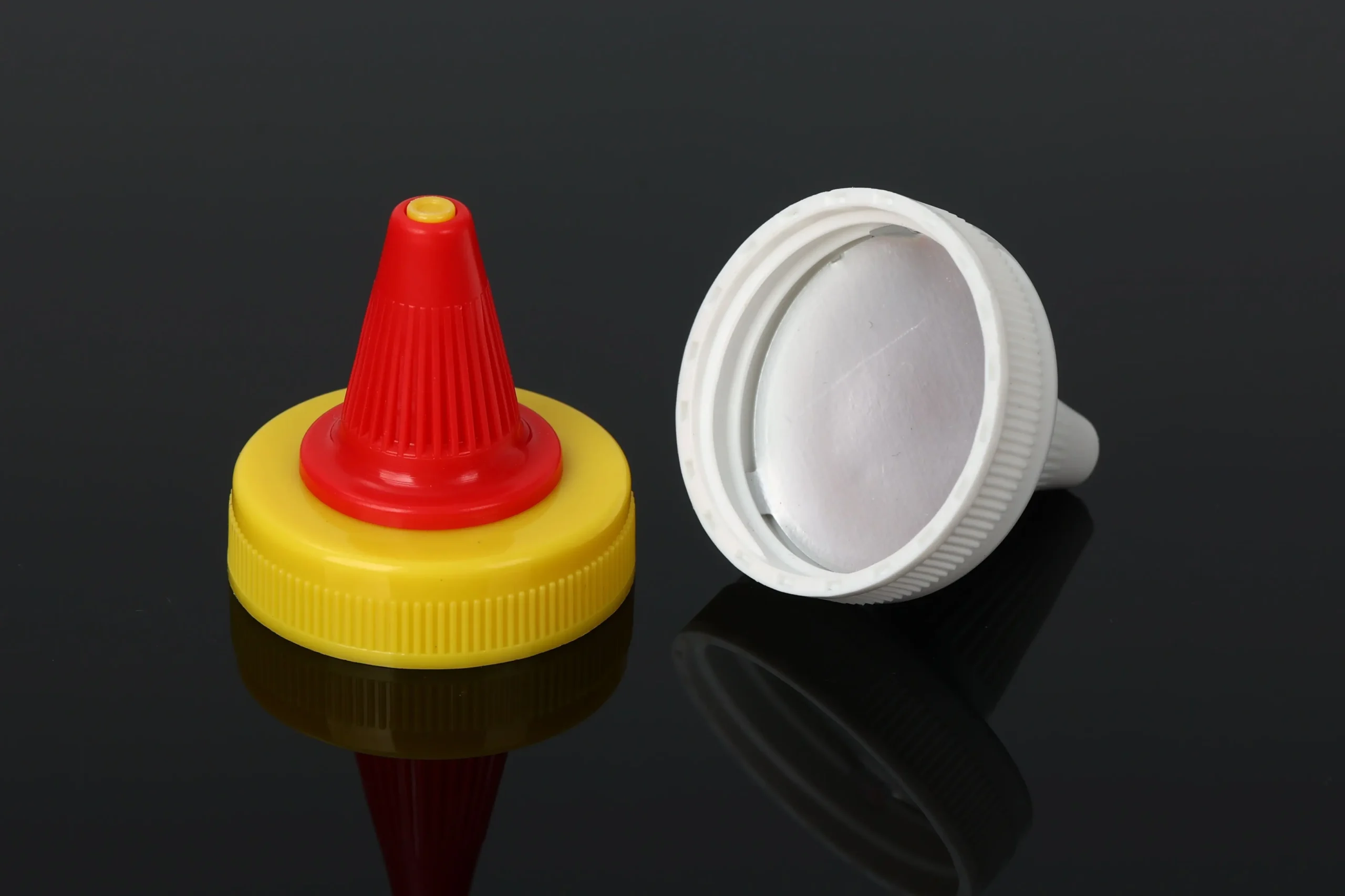
Honey doesn’t pour like water, and that changes almost everything about how a cap needs to work. A 24/410 Twist Open Cap built for honey has to control a slow, sticky flow, seal reliably during shipping, and still open with one simple twist. Food manufacturers and packaging buyers looking at this closure type need to look past the basic spec and check how the cap performs with the actual product.
Why Does Honey Need a Specialized Dispensing Cap?
Honey is thick, slow-moving, and prone to leaving residue around the opening after each use. A standard flip-top or screw cap built for thin liquids often struggles here — the product drips, the opening clogs slightly over time, or the cap doesn’t reseal cleanly enough to stop leakage during transport.
A twist open dispensing closure solves part of this problem by letting the user control the opening and closing motion directly, without needing a separate overcap. But a twist mechanism alone doesn’t guarantee good performance. How well it works depends on the cap’s internal structure, the sealing system behind it, the bottle it’s paired with, and the honey’s own viscosity and temperature sensitivity. A cap that handles a thin agave syrup well might not control thicker, cold-stored honey the same way.
How Does a 24/410 Twist Open Cap Match the Bottle Neck?
The number “24/410” refers to a specific neck finish, not a generic 24mm size. Two bottles can both measure 24mm across the opening and still use different thread patterns, sealing surfaces, or cap heights. Treating 24/410 as interchangeable with other 24mm closures is a common mistake that causes fit problems late in a project.
Buyers should check thread compatibility, the sealing surface where the liner or cap contacts the bottle, cap retention strength, and the position of the dispensing tip relative to the bottle opening. Cap height and manufacturing tolerance also matter more than they might seem — a small variance can affect how the twist mechanism lines up.
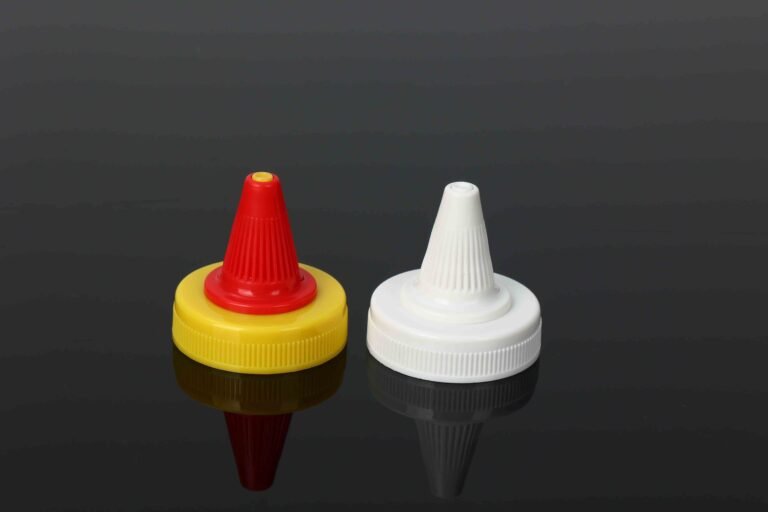
The dispensing tip itself is often available in a natural or transparent finish, but color and final structure should always be confirmed with actual product photographs or physical samples rather than a general description. And before any order moves forward, a bottle drawing or physical bottle sample should go to the supplier for a real compatibility check, not just a written spec sheet.
Powiązane artykuły:
Does a Liner Improve Sealing for Honey and Oily Foods?
A liner sits between the cap and the bottle neck, and its job is to close small gaps that the threads alone can’t seal. For products that travel long distances or sit in warehouses through temperature swings, that extra seal often makes the difference between a dry shelf and a sticky one.
Honey and other oily foods put different demands on a liner compared to, say, a carbonated drink. The liner material needs to resist the product’s chemistry, hold up under storage conditions, and meet food contact requirements for direct or indirect contact. Not every project needs a liner — it depends on the bottle material, the cap design, and how the product will be stored and shipped. A supplier should help evaluate this based on the full packaging system, not offer a single default answer.
What Food Contact Documents Should European Buyers Request?
For food producers selling in Europe, “food grade” by itself doesn’t carry much weight without paperwork behind it. Buyers should ask for a Declaration of Compliance, confirmation of compliance with EU Regulation 1935/2004 and EU Regulation 10/2011, and migration testing results using a simulant appropriate to the product — for oily foods like honey, that’s typically Simulant D2.
Material information for both the plastic components and the liner should be available, along with batch traceability. These documents protect the buyer’s own regulatory standing once the product reaches retail, so it’s worth requesting them early rather than after an order is placed.
What Should You Confirm Before Ordering Samples and Mass Production?
Before committing to a production run, buyers should gather: exact product photographs, a technical datasheet, cap drawings, confirmation of the 24/410 neck finish, dispensing orifice size, tip color options, liner availability, and the relevant food contact documents. On the commercial side, that means confirming MOQ, sample availability, sample shipping to the buyer’s location, production lead time, and any customization for color or branding.
Sample testing matters most with high-viscosity products. Honey behaves differently at room temperature versus cold storage, and a cap that seals well in a lab test might still need adjustment once real honey and real shipping conditions come into play. Leakage testing and compatibility testing with the actual product should happen before any large order goes to production.
A Real Inquiry: Sourcing a 24/410 Cap for Honey
A food producer based in Barcelona recently reached out about a 24/410 twist open and close dispensing cap for a line of honey and oily food products. The requirements were specific: no separate overcap, a natural or transparent dispensing tip, a liner if one was available for the application, and exact product photographs before moving forward.
On the compliance side, the producer requested a Declaration of Compliance, confirmation against EU Regulation 1935/2004 and EU Regulation 10/2011, and migration data using Simulant D2 — standard requirements for a European food brand bringing a new closure into their supply chain.
The response process followed a fairly direct path: confirming the exact article and cap structure, checking bottle neck compatibility against the customer’s bottle, reviewing available liner options for the honey application, and gathering the requested compliance documents. From there, the conversation moved to MOQ, production lead time, and arranging samples for shipment to Barcelona so the producer could test the cap with their actual product before any commitment to volume.
Wnioski
A suitable 24/410 Twist Open Cap for honey comes down to four things: correct bottle neck compatibility, reliable sealing and dispensing performance, food contact materials and documentation that match the product and market, and successful sample testing before mass production begins.
XUFU supports food packaging projects like this with dispensing cap options, liner selection, sample development, technical confirmation, compliance documentation, and volume production for honey and other high-viscosity food products.
Wszystkie zawory w magazynie | Szybka dostawa
Pobierz bezpłatną próbkę już teraz
Gotowy do wysyłki w ciągu 3 dni. Konkurencyjna cena. Dostępne bezpłatne próbki!
*Minimalna ilość zamówienia 10 000 sztuk.