Portuguese
 English
 German
 Spanish
 Italian
 Russian
 Arabic
 Korean
 Japanese
 French
 Dutch
 Danish
 Norwegian
 Turkish
 Czech
 Lithuanian
 Polish
 Slovenian


Estudos de caso
- Início
- Estudos de caso
- Silicone valve components for bottle caps before assembly
Silicone Valve for Bottle Caps: Storage and Handling Questions Buyers Should Ask
Índice
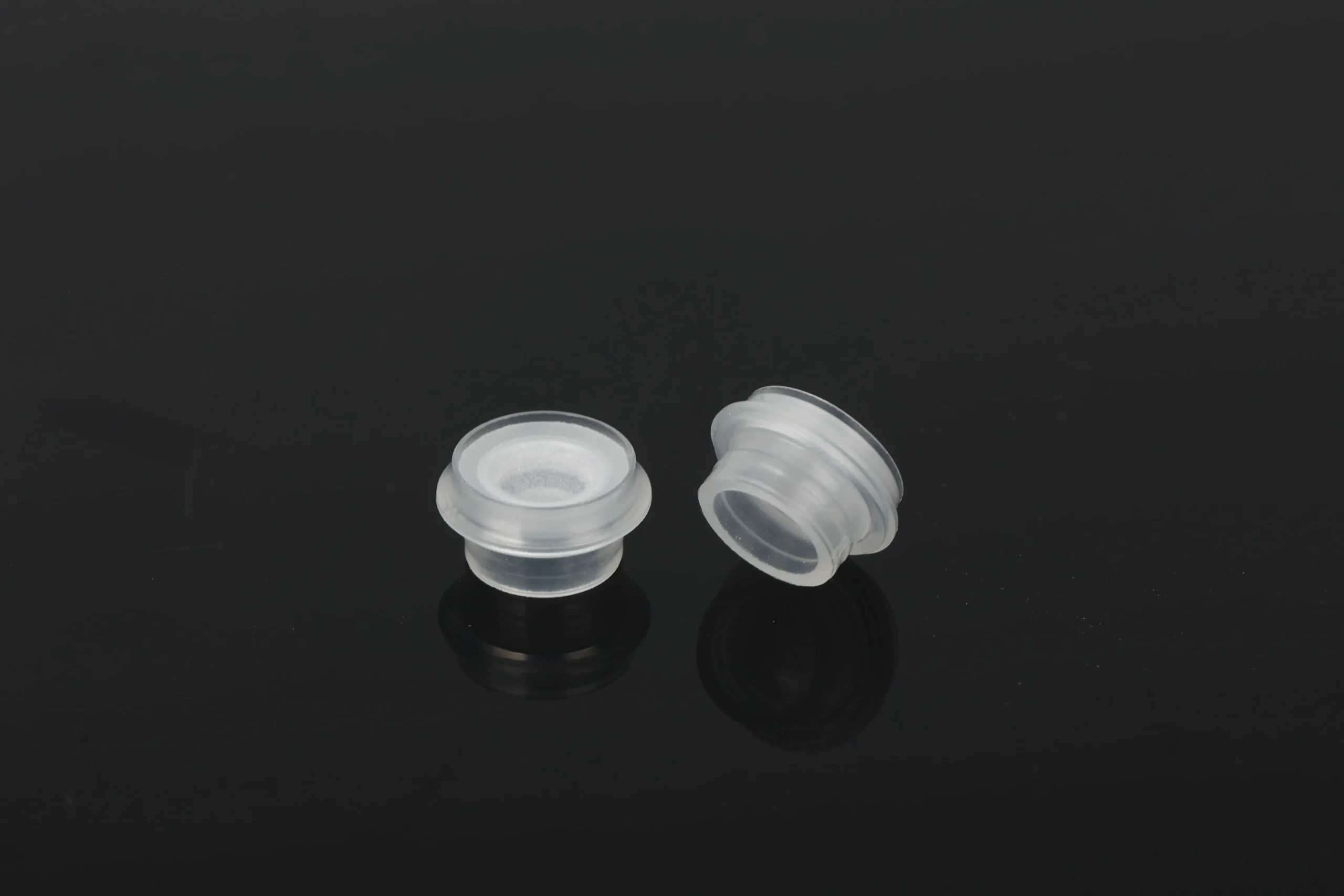
A practical guide to confirming storage conditions, protective packaging, opened-pack handling and stock-release requirements before ordering silicone valves for bottle caps.
A customer sent a short inquiry in Spanish:
“Válvula de silicona para tapa 38 410.”
The request translates to “silicone valve for a 38/410 cap.” It identified the intended cap specification, but did not include valve drawings, application details, order quantity or inventory plans.
While the immediate task was to clarify the required component, the inquiry also raised an important purchasing question: how would the valves be stored and handled between delivery and assembly?
This article uses that actual inquiry as a starting point for a proposed storage-and-handling review. No sample approval, storage trial or production result has yet been established.
Start With More Than Component Selection
Selecting a silicone valve for bottle caps involves defining not only what will be supplied, but also how the components should be protected before use.
For this customer’s project, the next discussion should establish whether the valves will be assembled immediately or held in stock, whether packages will be opened for inspection, and whether production will consume complete packages or partial quantities.
These answers help define practical delivery and handling instructions. General elastomer-storage guidance addresses packaging, environmental protection and record keeping alongside storage duration.
Confirm Storage Instructions Before Ordering
The supplier should provide written instructions for the specific valve material and packaging configuration.
Buyers should ask about:
Recommended storage conditions
Protection from sunlight and heat
Packaging requirements
Restrictions on stacking or compression
Storage periods and review dates
Procedures following abnormal exposure
General guidance recommends protecting rubber components from direct sunlight, contamination and deformation. For silicone valves, the supplier should translate these principles into product-specific instructions rather than simply referring buyers to a generic rubber shelf-life chart.
Artigos relacionados:
Check Packaging and Identification on Arrival
For the 38/410 cap inquiry, a proposed receiving checklist would include the valve part number, approved specification revision, batch identification, quantity and packaging condition.
If cartons or inner bags arrive damaged, the receiving team should record the condition before releasing the stock. Labels should remain connected to the corresponding components throughout inspection and storage.
This approach supports traceability and follows the broader principle that packaging and records are part of elastomer storage management.
Define What Happens After Opening
An unopened package and a partly used package require different handling arrangements.
Before supply begins, the customer and supplier should agree on a procedure covering:
Opening packages for incoming inspection
Transferring valves to production
Protecting unused quantities
Reclosing or replacing packaging
Recording remaining quantities and batch details
A practical internal rule is to keep different batches identifiable rather than mixing loose components in an unlabelled container. Any replacement packaging should also be suitable for contact with the valves; general guidance warns against packaging materials that could adversely affect rubber components.
This is particularly relevant if the customer plans to purchase a larger quantity and assemble caps in smaller production runs.
Establish Rules for Long-Term or Questionable Stock
The customer’s inquiry did not state how long the valves would remain in inventory. That information should be collected before agreeing on storage and release requirements.
Buyers should request a product-specific storage period, its starting date and any inspection or retesting conditions. An initial storage period is not necessarily an automatic disposal deadline: elastomer guidance distinguishes the period before inspection or retesting from the decision about continued suitability.
For damaged packaging or abnormal storage, the proposed process should be to hold the affected stock, document the circumstances and obtain an assessment before production use. Relevant factors include contamination, heat, light exposure and deformation.
Silicone Valve Storage & Supply Management
Find answers about silicone valve storage conditions, incoming inspection, batch traceability, opened-pack handling, shelf life, and stock-release requirements for 38/410 cap assembly projects.
01
How should silicone valves be stored before assembly?
Keep them in approved protective packaging and follow the supplier’s written instructions. Protect them from contamination, direct sunlight, heat and mechanical deformation.
02
What should buyers check when valves arrive?
Check identification, quantity and packaging condition against the order. Maintain batch records so stored components remain traceable. Recording and packaging controls are part of general elastomer-storage guidance.
03
Can unused valves be returned to storage after opening?
Define this procedure with the supplier. Remaining valves should be protected and identifiable, with suitable packaging used to avoid adverse contact with the components.
04
Do all silicone valves have the same shelf life?
Do not assume a universal period. Obtain product-specific instructions, including the starting date, storage conditions and requirements for inspection or retesting.
05
What if packaging is damaged or storage conditions are uncertain?
Hold the affected stock for assessment rather than automatically releasing it. Document the batch, packaging damage and available exposure information so the responsible team can evaluate the relevant risks.
Turn a Short Inquiry Into a Complete Supply Plan
The customer’s request established a need for a valve used with a 38/410 cap, but it did not yet define a complete supply arrangement.
Alongside confirming the valve itself, the next step is to agree on packaging, receiving checks, storage instructions, opened-pack handling and stock-release rules. This gives both parties a clearer basis for quotation and future supply—without presenting unverified assumptions as completed project results.
Todas as válvulas em stock | Entrega rápida
Obter uma amostra grátis agora
Pronto a enviar no prazo de 3 dias. Preço competitivo. Amostras grátis disponíveis!
*Quantidade mínima de encomenda de 10.000 unidades.