Slovenian
  English
  German
  Spanish
  Italian
  Russian
  Arabic
  Korean
  Japanese
  French
  Dutch
Dutch  Danish
  Norwegian
  Portuguese
  Turkish
  Czech
Czech  Lithuanian
  Polish

Študije primerov
- Domov
- Študije primerov
- Snap-On Cap with Silicone Valve for Shampoo Bottles
How Does a Cap with Silicone Valve Work for Shampoo Bottles?
Kazalo vsebine
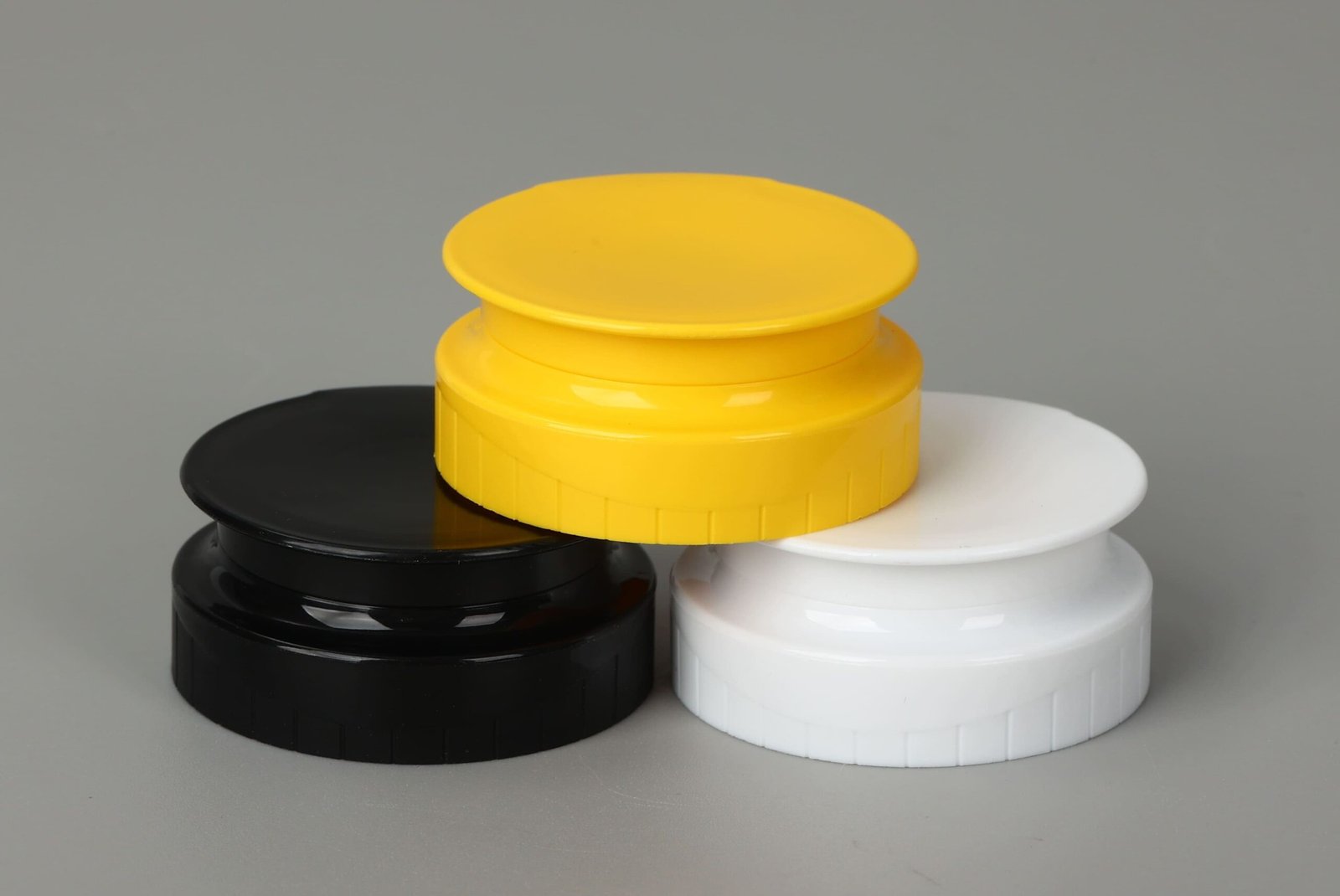
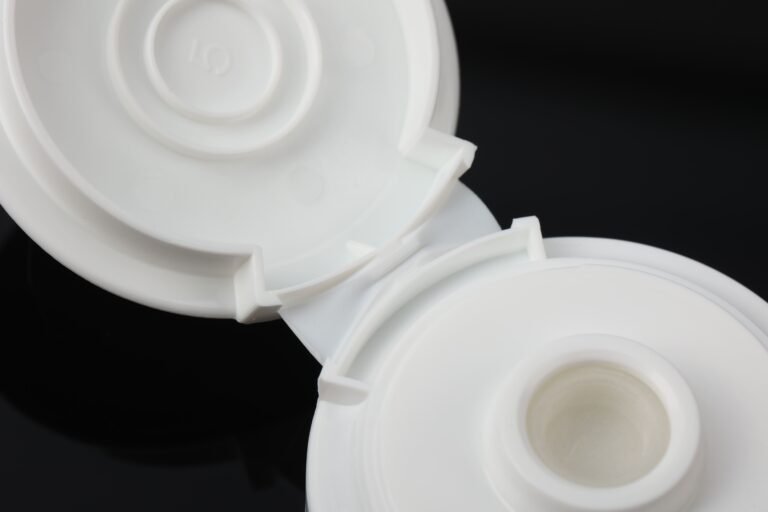
A shampoo bottle does not always need a threaded closure. For some packaging designs, a snap-on cap with silicone valve can offer a simple way to dispense the product.
The idea is easy to understand. You squeeze the bottle, shampoo comes through the flexible silicone valve, and the valve closes again after you release the bottle.
But getting this small closure to work well takes more than putting a silicone valve into a plastic cap. The bottle neck, snap-fit structure, valve design, shampoo viscosity, and sealing performance all need to match.
Why Choose a Snap-On Cap for Shampoo Packaging?
A snap-on shampoo bottle cap attaches to the bottle neck through a snap-fit structure instead of a screw thread. This can make cap assembly faster during production.
For a shampoo or personal care package, the cap also needs to stay firmly attached during transport and daily use. The cap cannot come loose when the consumer squeezes the bottle.
This is where the bottle neck and cap design become important. The inner structure of the cap must match the bottle neck dimensions. Retention force and tolerance also need to be checked during development.
Dober snap fit bottle closure should feel secure without making assembly unnecessarily difficult.
How Does Shampoo Viscosity Affect Valve Performance?
Shampoo is usually thicker than water, and different shampoo formulas can flow very differently.
A valve that works well for a thin liquid may not give the same result with a medium-viscosity shampoo. The valve may feel too hard to open, or the product may come out too slowly.
During development, engineers may review:
- Valve opening size
- Trdota silikona
- Slit design
- Odpiralni tlak
- Flow rate
- Valve recovery
- Sealing performance
The goal is not simply to make a larger opening. A large opening can improve flow, but it can also make leakage control harder.
For this reason, a shampoo dispensing cap should be tested with the actual product whenever possible.
Sorodni članki:
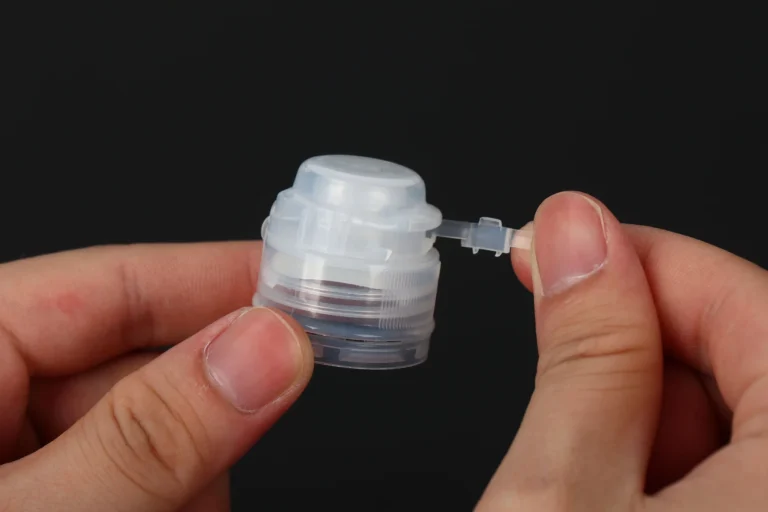
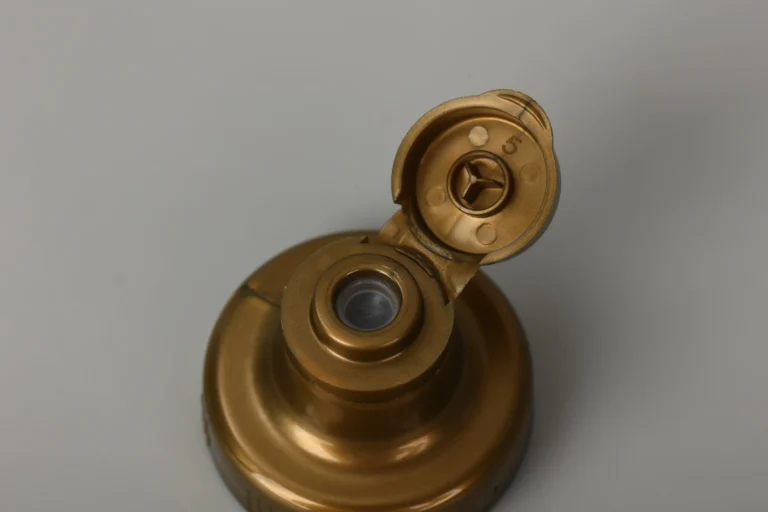
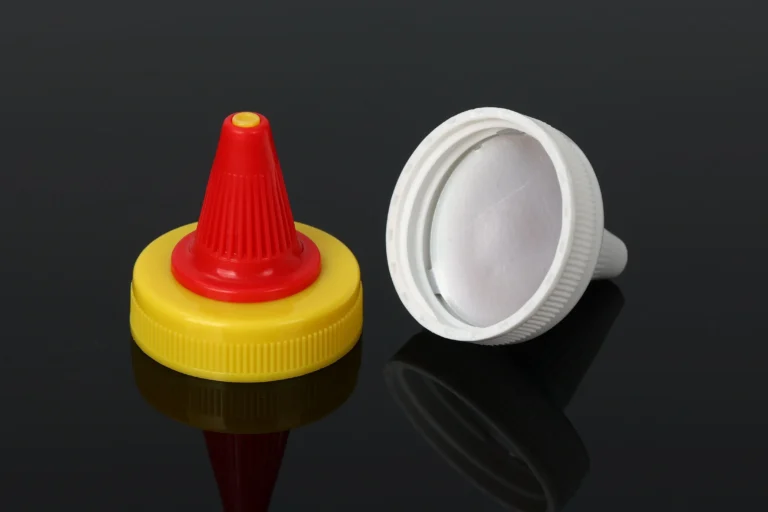
What Should You Check When Designing a Snap-Fit Bottle Cap?
The first step is to check the bottle.
A customer may provide a reference cap with a diameter of about 35 mm and a height of about 28 mm. These numbers give the manufacturer a starting point, but they are not enough to complete the design.
The bottle neck drawing should also show the dimensions needed for the snap-fit connection.
The design team should check:
- Bottle neck dimensions
- Cap inner diameter
- Snap-fit structure
- Retention force
- Cap height
- Sealing area
- Valve position
- Manufacturing tolerance
For a plastic dispensing cap, these details affect both assembly and final use.
A cap that fits during a hand test may still need changes before automatic production.
Rezultati z 38 400 neprepustnim pokrovčkom Flip Top Cap v embalaži Premium Sauce
Po implementaciji je stranka opazila merljive izboljšave na področju učinkovitosti in uporabniške izkušnje.
Odprtine za steklenice so ostale čiste, brez vidnih nanosov omake. Kapljanje je bilo učinkovito odpravljeno, doziranje pa je postalo bolj gladko in nadzorovano.
Potrošniki lahko z rahlim pritiskom zlahka prilagodijo količino čokoladne omake. To je izboljšalo nadzor porcij in zmanjšalo nered med uporabo.
Prevozni pobegi so se znatno zmanjšali, zlasti pri pošiljkah e-trgovine. Zunanja embalaža je ostala čista, kar je zmanjšalo število pritožb in vračil.
Spletna stran sijajni zlati pokrovček večja prisotnost na prodajnih policah, kar je v skladu s premijskim pozicioniranjem blagovne znamke. Embalaža je bila bolj prefinjena in higienična.
Na splošno je zapiranje s silikonskim ventilom spremenilo izdelek v pravo rešitev za pakiranje živil premium kakovosti, ki združuje čisto doziranje, zanesljivo tesnjenje in večje zadovoljstvo potrošnikov.
What Tests Should a Silicone Valve Shampoo Cap Pass?
A sample should be tested as a complete package, not as a cap alone.
A leakage test checks whether shampoo escapes when the bottle is stored or handled.
A squeeze test checks the force needed to open the valve and dispense the product.
A valve recovery test checks whether the silicone valve closes properly after pressure is released.
The cap itself also needs a retention test. The snap-on closure must stay attached to the bottle during normal use.
Repeated dispensing tests can provide more useful information than a single squeeze. They show whether the valve keeps its sealing and dispensing behavior after repeated use.
A Real Project: Developing 250,000 Snap-On Shampoo Caps per Year
In a recent customer inquiry, a buyer was looking for a snap-on cap with silicone valve for a shampoo bottle.
The requested cap had an approximate diameter of 35 mm and a height of 28 mm. The customer needed a flexible silicone valve in the center. When the bottle was squeezed, the shampoo should dispense through the valve. After the squeeze, the valve should close and seal again.
The planned volume was about 250,000 pieces per year.
The customer also provided reference photos and was ready to send a technical drawing if the structure could be produced.
For a project like this, XUFU would first review the bottle neck and closure dimensions. The team can then evaluate the snap-fit structure and silicone valve design before moving to samples and testing.
If the standard design does not match the bottle, XUFU can support custom tooling, silicone valve molding, LSR molding, plastic injection molding, prototype development, and mass production.
A successful shampoo bottle cap is not just a cap that snaps onto a bottle. It needs to stay attached, dispense the right amount of product, and close again after each squeeze. That is where careful closure and valve design make the difference.
All Valves & Caps in Stock | Fast Delivery
Pridobite brezplačen vzorec zdaj
Pripravljen za odpremo v 3 dneh. Konkurenčna cena. Na voljo so brezplačni vzorci!
*Minimalna količina naročila 10.000 enot.