Czech
Czech  English
  German
  Spanish
  Italian
  Russian
  Arabic
  Korean
  Japanese
  French
  Dutch
Dutch  Danish
  Norwegian
  Portuguese
  Turkish
  Lithuanian
  Polish
  Slovenian


Cross-Slit Silicone Valve vs Duckbill Valve: Which Is Better for Shampoo Bottles?
Obsah
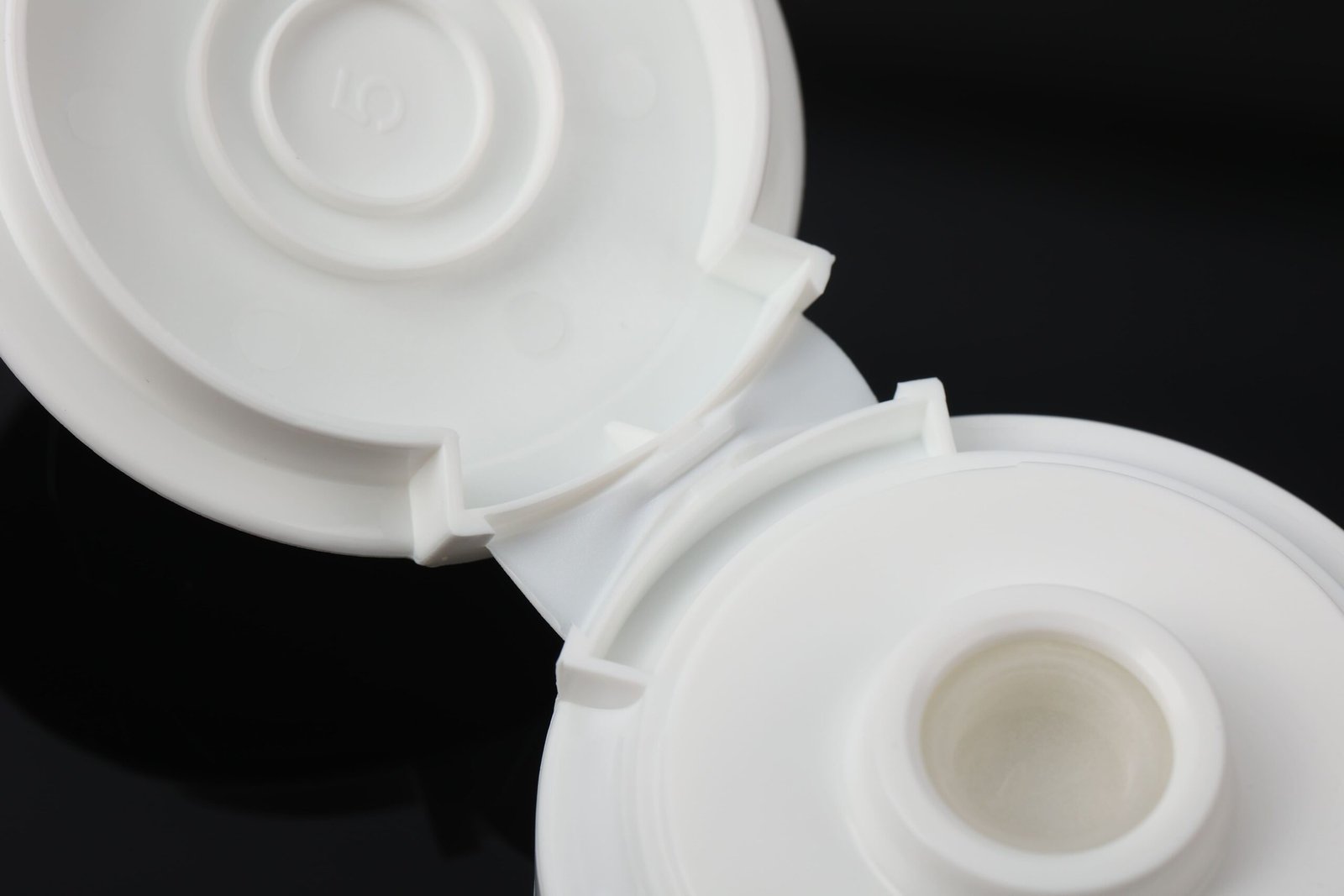
A shampoo dispensing cap for an inverted bottle must solve a simple but demanding problem: shampoo should not leak while the bottle stands upside down, but it should flow easily when the user squeezes it.
This is why the valve matters. Shampoo viscosity, bottle position, static liquid pressure, valve opening force, and cap structure all affect the final user experience. A cross-slit silicone valve can work very well in this setting, but it is not the right choice for every formula or bottle design.
Why Does an Inverted Shampoo Bottle Need a Self-Sealing Valve?
Many shampoo brands use an inverted bottle because the product stays close to the opening. Consumers can use the last portion more easily and do not need to shake or turn the bottle before each use.
The same design puts constant pressure on the outlet. In an inverted shampoo bottle, the shampoo rests against the valve all the time. A basic opening may allow slow dripping, leakage during transport, or product buildup around the shampoo bottle cap.
A samouzavírací silikonový ventil can close the outlet when the bottle is not being squeezed. This gives the package a better chance of staying clean during normal storage. A well-matched leakproof dispensing cap should resist static liquid pressure while still giving the consumer a comfortable squeeze experience.
Cross-Slit Silicone Valve vs Duckbill Valve: How Do They Work?
A silikonový ventil s křížovou štěrbinou uses an X-shaped cut in a flexible silicone membrane. It is also called an X-cut valve, silicone slit valve, or silicone cross slit valve. When pressure inside the squeeze bottle cap rises, the sections around the slit flex open. When the pressure drops, the silicone membrane moves back toward its closed position. Cross-slit valves are commonly used in dispensing packages because they can open at a selected pressure and close after dispensing.
Související články:
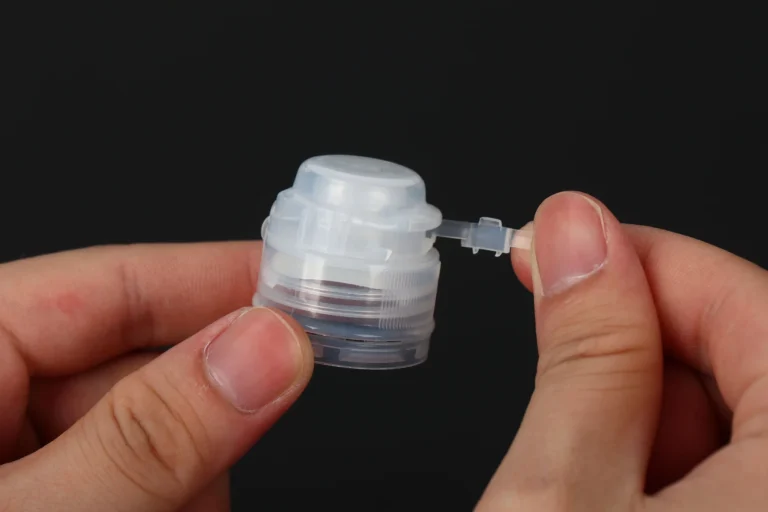
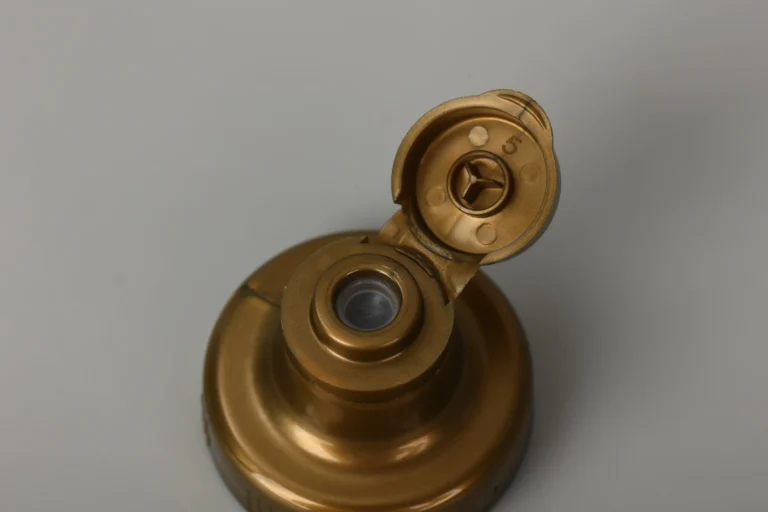
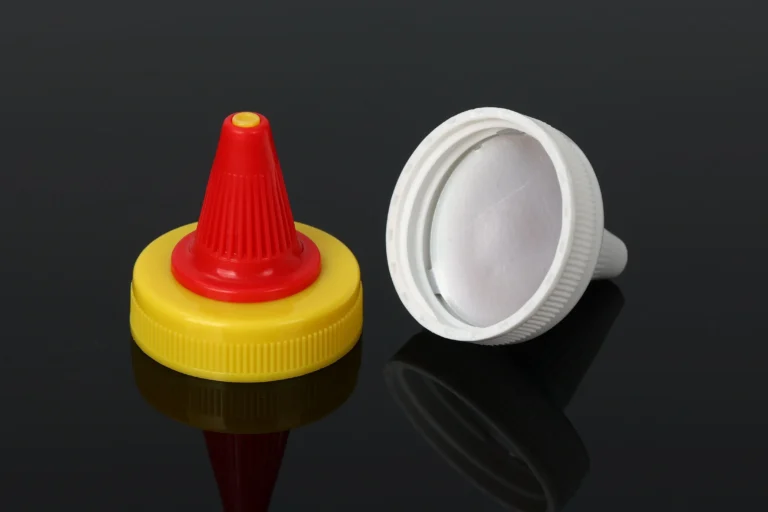
A Kachlový ventil has two flexible lips that form a narrow outlet, similar to a duck’s bill. It acts as a one-way silicone valve. Forward pressure opens the lips, while lower pressure or reverse pressure helps bring them together again. Duckbill valves are widely used for one-way flow and backflow control.
The better valve depends on the shampoo, viscosity, bottle position, required flow rate, and sealing requirements. A duckbill valve may suit one-way flow control in some packages. A cross-slit valve may suit an inverted dispensing bottle that needs a compact central outlet and controlled dispensing.
Why Cross-Slit Valves Can Work Well for Shampoo Bottles
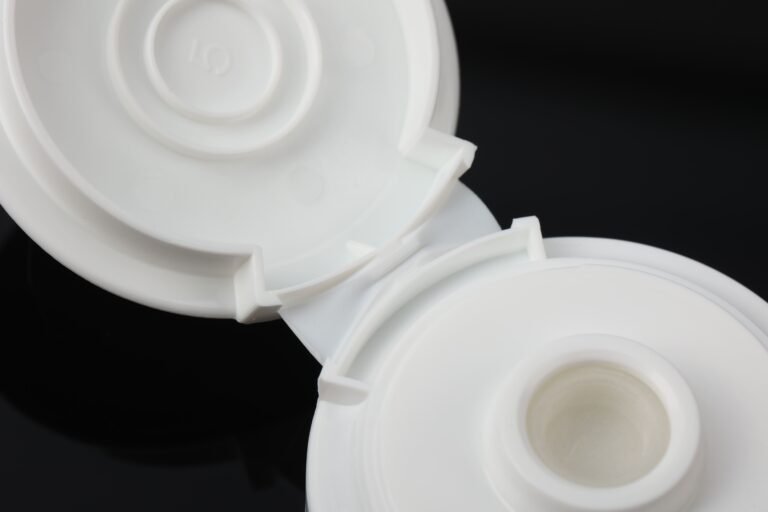
A flipové víčko se silikonovým ventilem can help control flow in an upside down shampoo bottle.
At rest, shampoo creates static liquid pressure at the valve. With the right silicone valve hardness, slit geometry, and valve support, the cross-slit valve can remain closed. When the consumer squeezes the bottle, internal pressure increases. The X-cut silicone valve opens and allows shampoo to flow.
When the consumer releases the bottle, pressure falls. The silicone membrane can recover and close the valve again. This pressure-activated action may reduce residual dripping and help the outlet stay cleaner.
The sequence is straightforward:
Bottle inverted: shampoo applies static liquid pressure
No squeeze: valve remains closed
Consumer squeezes: internal pressure rises and the valve opens
Consumer releases: pressure drops and the valve closes
This does not mean every cross-slit valve will perform the same way. The valve opening size, valve orifice, silicone thickness, valve opening force, and cap assembly all influence flow control and sealing.
How Shampoo Viscosity Affects Silicone Valve Design
Shampoo formulas vary widely. A medium-viscosity liquid shampoo needs different valve behavior from a thin cleansing liquid or a thick conditioner.
Higher-viscosity products often need a suitable flow path and valve opening so consumers do not need to squeeze too hard. However, a larger valve opening does not automatically create better dispensing performance. It can reduce product control, increase dripping, or weaken liquid pressure sealing.
A silicone valve design for shampoo should review:
Shampoo viscosity and formula behavior
Valve opening size and slit length
Silicone valve hardness
Valve opening force
Bottle wall flexibility
Desired product flow
Recovery and sealing after each squeeze
For a thick liquid dispensing cap, the target is a balance. The user should get enough shampoo with a normal squeeze, while the valve should remain closed during normal inverted storage.
What Should You Check When Matching a Silicone Valve to a Flip Top Cap?
The valve and cap need to work as one assembly. A valve may look correct in a CAD drawing but behave differently after it is installed in a plastic dispensing cap.
Buyers should review the cap outer diameter, cap height, valve OD, valve position, valve opening, and cap outlet design. They should also confirm the bottle neck finish.
For example, a 28mm flip-top cap may use a 28/400 closure nebo 28/410 closure. Both share a nominal 28mm diameter, but their thread structures and engagement details can differ. They should not be treated as interchangeable without a technical drawing and bottle sample review.
For bottle cap compatibility, XUFU checks:
Bottle neck drawing and physical bottle sample
Thread profile and sealing surface
Cap and valve assembly method
Valve seat dimensions
Bottle squeeze behavior
Final shampoo formula
A customer’s reference dimensions are useful, but they are only the beginning of the engineering review.
Co byste měli otestovat před zahájením sériové výroby?
A valve that looks correct on a drawing still needs testing with the real product.
For a shampoo dispensing cap project, XUFU recommends:
Inverted leakage test: Keep filled bottles upside down and inspect the valve, cap, and neck area.
Squeeze test: Check whether the valve opens with practical consumer force.
Recovery test: Release pressure and confirm the silicone valve returns to a closed state.
Flow test: Review output speed, stream shape, and controlled dispensing.
Repeated-use test: Simulate repeated squeezing and cap opening cycles.
Compatibility test: Confirm the valve, PP cap, bottle, and shampoo work together.
Storage temperature, transport orientation, and expected consumer use should be part of the test plan.
A Real Project: Designing a Cross-Slit Valve for an Inverted Shampoo Bottle
In a recent project inquiry, a customer was developing an inverted shampoo bottle for a medium-viscosity product. The bottle used a 28mm neck, but the final neck finish still needed confirmation between a possible 28/400 or 28/410 format.
The brief called for a compact PP cap with a cross-slit valve, custom color, and an optional embossed logo. The customer also wanted to plan MOQ levels before moving from samples to larger production.
Instead of selecting a standard silicone valve cap immediately, XUFU first reviewed the bottle neck, cap profile, valve seat, shampoo behavior, and expected squeeze force. The team then selected an X-cut valve direction for prototype work.
The next stage was practical: assemble the silicone valve prototype into the cap, run inverted leakage testing, and test dispensing with the actual shampoo. This process helps decide whether the valve opening, silicone hardness, and cap geometry give the right balance between sealing and flow.
How XUFU Develops Custom Silicone Valve Caps
XUFU supports custom silicone valve projects through bottle and cap drawing review, valve structure selection, silicone valve prototype development, LSR molding, custom tooling, injection molded PP caps, valve assembly, and sample testing.
The process can also include color matching, logo or embossing work, leakage testing, squeeze testing, and mass production planning. As a silicone valve manufacturer and OEM dispensing cap supplier, XUFU starts with the product and bottle rather than choosing from a standard valve catalog.
For an inverted shampoo bottle, the right valve is not simply the one that opens easily. It is the one that stays closed under normal liquid pressure and opens when the user applies the right amount of squeeze pressure. That is the balance XUFU evaluates during design, sampling, and production.
Všechny ventily skladem | Rychlé dodání
Získejte vzorek zdarma
Připraveno k odeslání do 3 dnů. Konkurenční cena. Vzorky zdarma k dispozici!
*Minimální objednací množství 10 000 kusů.