Danish
  English
  German
  Spanish
  Italian
  Russian
  Arabic
  Korean
  Japanese
  French
  Dutch
Dutch  Norwegian
  Portuguese
  Turkish
  Czech
Czech  Lithuanian
  Polish
  Slovenian


What Should You Check When Buying a Twist Open Cap for Food Packaging?
Indholdsfortegnelse
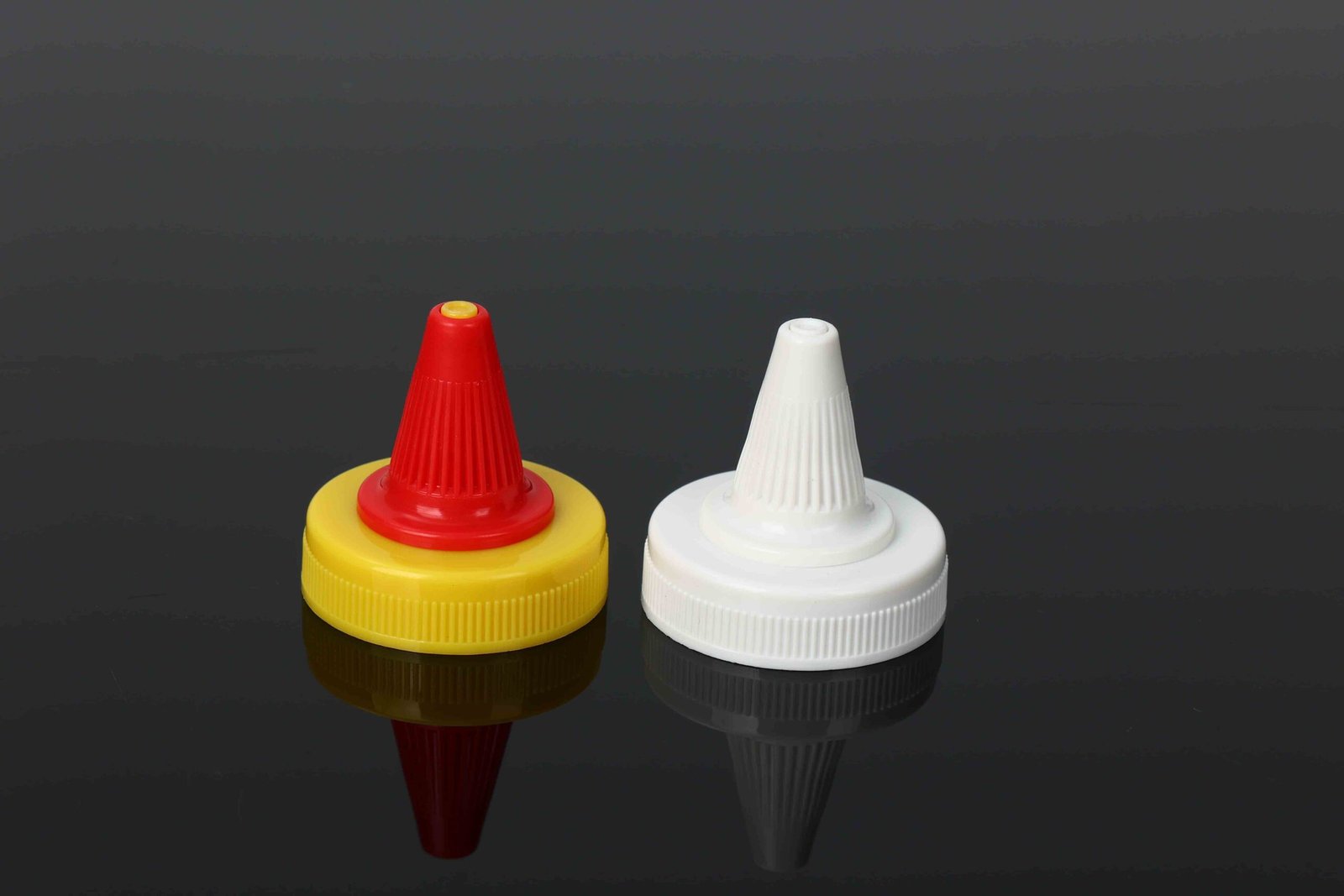
A Drejelig åben hætte may look simple, but it sits between your product and the consumer. For dairy drinks, yogurt bottles, sauces, and other food products, the cap must fit the bottle, open smoothly, and meet food contact requirements.
At xufu, we start with the bottle and the product—not just the cap size. A 24/410 twist open cap for milk may need different testing conditions from a twist open bottle cap used on a shelf-stable sauce.
Twist Open Cap: A Buyer’s Guide to Food Contact Compliance
A twist open cap is a plastic bottle closure with an outlet that users twist to open or close. It is common on squeeze bottles, dairy packaging, beverage bottles, and food containers.
Buyers often ask for a food grade bottle cap, but this should mean more than “food-safe material” on a quotation. You need to confirm the intended food type, contact time, filling temperature, storage conditions, and whether the cap touches the product directly.
For EU food contact compliance, plastic food contact materials require supporting documentation and a written Declaration of Compliance, or DoC, through the supply chain before retail. The DoC should identify the material and state the conditions under which it can be used.
For UK food contact compliance, requirements should also be reviewed against the current UK rules for the market where the product will be sold. Do not assume that one document covers every food, temperature, or region.
Why Bottle Neck Compatibility Matters for 24/410 Closures
A 24/410 closure is not defined by diameter alone. The bottle neck finish also includes the thread profile, thread height, sealing land, and other neck dimensions.
Thread Profile
The thread profile is an important part of a 24/410 bottle neck finish. Small differences can affect how the cap engages with the bottle during capping.
Neck Dimensions
Diameter alone does not confirm compatibility. Neck dimensions, thread height, and sealing areas should be checked before selecting a 24/410 closure.
Bottle Drawing
A technical drawing of the bottle neck finish helps us review the thread, sealing area, and key dimensions before producing a cap sample.
Physical Bottle Sample
A physical bottle sample provides a more reliable way to check the actual fit between the bottle neck and the 24/410 twist open cap.
Filling & Capping Method
Filling temperature and capping method can affect closure performance. Sharing these details helps us evaluate the cap for your production process.
Product Application
Product details such as dairy, juice, yogurt, or sauce help us consider the sealing system and dispensing requirements for your application.
Compatibility Check Before Sampling
XUFU compares bottle thread compatibility, closure dimensions, and the sealing system before making a valve sample or cap sample. This is more useful than approving a photo of a plastic bottle closure and helps reduce the risk of cross-threading or leakage during transport.
Relaterede artikler:.
How to Prepare a 750,000-Piece Annual Cap Project
A large annual program needs more than a good unit price. In one XUFU food packaging project, the customer planned demand of 750,000 caps per year for a dairy-style drink bottle. The team first focused on a 24/410 neck cap and a custom silicone valve. We asked them to slow down and confirm the basics.
Bottle Neck Information
Provide a bottle neck drawing and a physical bottle sample so the 24/410 cap can be checked against the actual bottle finish.
Cap Technical Drawing
Confirm the cap technical drawing, closure dimensions, thread details, and other key specifications before moving into production planning.
Food Grade Materials
Confirm the food grade PP and silicone material details for the cap and custom silicone valve used in the food packaging application.
Valve Sample & Leak Test
A valve sample should be tested with the actual product and packaging. Define the leak test method before final approval.
Food Contact Compliance
Prepare the DoC for food packaging and confirm the migration certification plan for the PP cap and silicone valve.
Demand & Delivery Forecast
Break down the annual forecast by color, delivery batch, and shipping schedule to support stable production and delivery planning.
Plan the Project Before Chasing the Unit Price
For a 750,000-piece annual cap program, the right preparation helps reduce compatibility, quality, compliance, and delivery risks. XUFU can review the bottle, 24/410 closure, food grade PP, silicone valve, testing requirements, and delivery forecast before moving into sampling and production.
The customer did not need all 750,000 pieces at once. We divided production into planned deliveries, approved samples before each final release, and kept the approved material and color standard on file.
For an OEM food grade packaging supplier, this process is not extra paperwork. It prevents a large annual order from becoming a large annual problem.
A twist open cap should fit the bottle, suit the product, and meet the food contact requirements of its destination market. Xufu helps buyers connect those details before mass production begins.
What Does a Declaration of Compliance Tell Food Packaging Buyers?
A Declaration of Compliance is a formal document that supports food contact compliance. It helps the buyer understand whether a food grade closure is suitable for its stated use.
For a food packaging cap, the DoC should normally identify the supplier and material, reference the applicable rules, and state restrictions on use. Those restrictions may cover food type, temperature, storage time, and the contact surface-to-volume ratio used for compliance work.
A DoC for food packaging does not mean that every cap can be used with every product. A cap approved for dry food may not be suitable for hot-fill dairy products. A cap intended for cold yogurt may need a different review for acidic beverages.
At xufu, we ask buyers where the product will be sold and how it will be filled before we prepare a food contact declaration. This keeps the paperwork connected to the real application.
Why Migration Testing Matters for Food Contact Caps
Migration testing checks whether substances from food contact materials move into food at unsafe levels. For plastic caps, testing often uses food simulants selected to reflect the product’s likely use.
EU rules set both overall and specific migration requirements for plastic food contact materials. The overall migration limit is generally 10 mg/dm² of food contact surface, or 60 mg/kg of food in certain cases. Testing conditions must match the real use of the cap, including food type, contact time, and temperature.
This matters for a milk bottle cap, yogurt bottle capeller beverage bottle closure. Dairy fat, acidity, heat treatment, and long storage periods can change what a laboratory needs to assess.
When silicone valves are included, buyers should also discuss the full assembly: PP cap body, silicone valve, color masterbatch, and any other food contact parts. Xufu can support silicone valve molding, LSR molding, silicone valve prototypes, and mold development, but final compliance testing should follow the agreed product application and market rules.
Nu er det din tur
Har du en ordre, du gerne vil afgive? Ræk ud til os!
Alle kasketter på lager | hurtig levering
Få en gratis prøve nu
Klar til at blive sendt inden for 3 dage. Konkurrencedygtig pris. Gratis prøver til rådighed!
*Mindste ordremængde på 10.000 enheder.