Danish
  English
  German
  Spanish
  Italian
  Russian
  Arabic
  Korean
  Japanese
  French
  Dutch
Dutch  Norwegian
  Portuguese
  Turkish
  Czech
Czech  Lithuanian
  Polish
  Slovenian


How Does a Silicone Valve Improve Soap Dispenser Performance?
Indholdsfortegnelse
Most dispensing complaints that reach a packaging engineer sound the same: the bottle drips, the cap gets sticky, and the label looks dirty after two weeks on a shelf. The liquid inside is fine. The closure is the problem. This is where a soap dispenser silicone valve changes the behavior of the whole package, because it replaces an open hole with a part that decides when liquid may leave the bottle and when it may not.
The valve itself is small and inexpensive. The effect it has on user experience, warehouse cleanliness, and returns is not small at all. Below is a practical look at how these valves work, where they struggle, and what you need to confirm before you specify one.
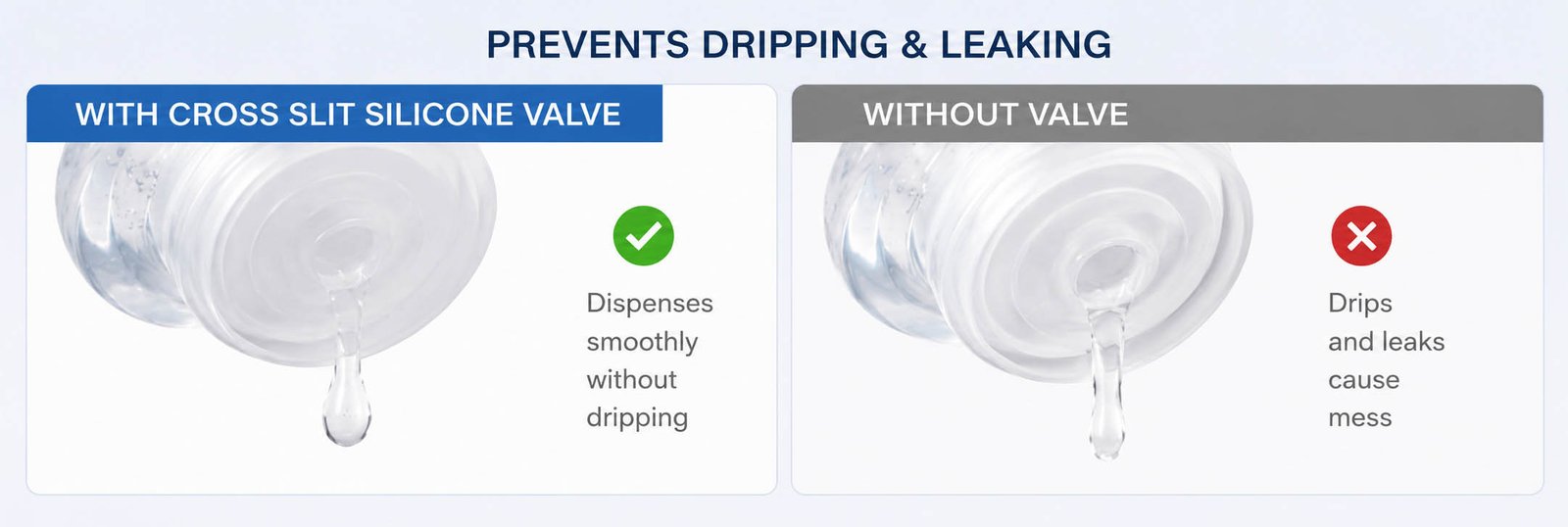
Why Traditional Soap Dispenser Openings Often Cause Dripping
A traditional dispensing hole is always open. Nothing closes it after use, so the last bit of liquid sitting in the orifice has only one place to go — down the side of the bottle.
Thin liquids run out quickly. Thicker soaps behave worse in a different way: they cling, string, and slowly ooze after the user stops squeezing. Either way, residue builds up around the outlet. Within a few uses, the cap collects a dried ring of soap, the neck feels tacky, and the printed label starts to discolor. Consumers read that as a low-quality product even when the formula is excellent.
The problems continue upstream of the consumer:
- Product waste. Every drop that escapes without being used is a small loss, and it repeats across the whole production run.
- Transport leakage. Cartons are stacked, pressure builds, and air trapped in the headspace expands during shipping. An open orifice offers no resistance.
- Storage position. Many people store bottles upside down to get the last of the product. An open outlet cannot handle that.
- Line contamination. Leaked soap on the outside of a bottle can transfer to cases and pallets, which creates rework before the product ever ships.
Foil seals and shipping plugs help during transit, but they do nothing once the consumer opens the package. The dripping starts on day one of actual use.
How a Silicone Valve Controls Liquid Soap Flow
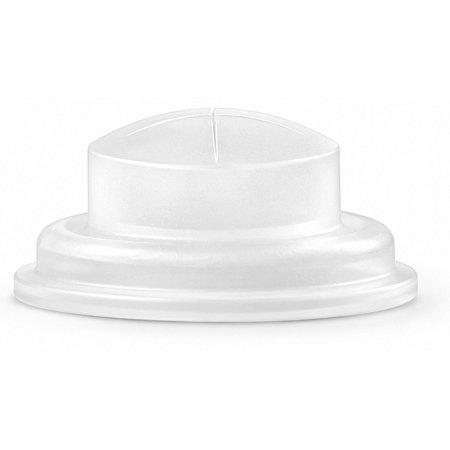
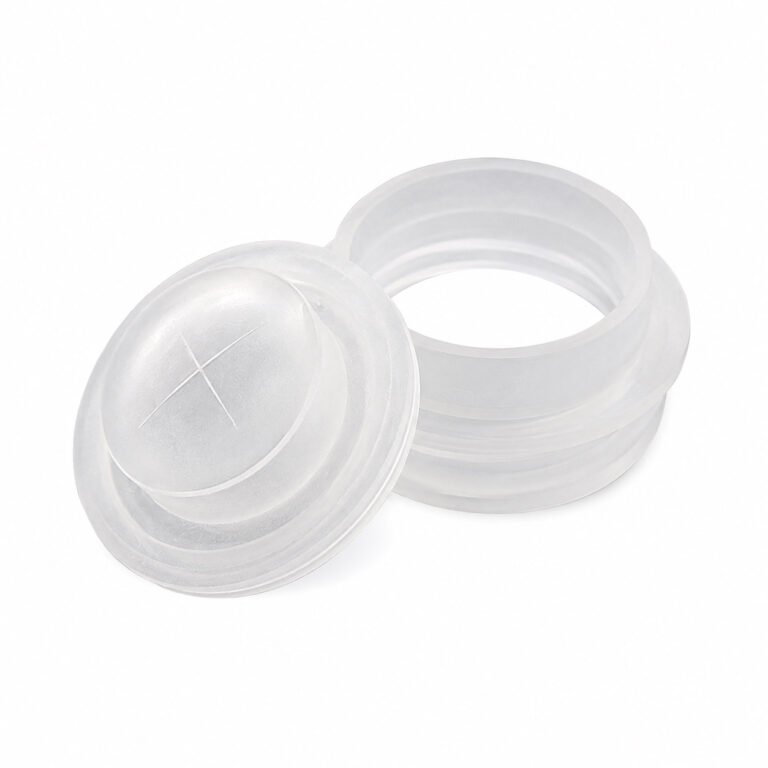
A Dispenseringsventil af silikone for liquid soap is a molded elastomer part with a slit, cross-slit, or duckbill opening. At rest, the slit faces are pressed together and the passage is closed. No pressure difference, no flow.
When the user squeezes the bottle or presses a pump, internal pressure rises against the underside of the valve. Once that pressure passes the valve’s opening pressure — often called cracking pressure — the slit deforms and separates, and liquid flows through. Release the pressure and silicone’s elastic recovery pulls the slit back into contact. The valve closes on its own, which is why this design is described as a self sealing valve for soap dispenser use.
Two details matter more than most buyers expect.
First, the valve is directional. Because the slit opens outward and seals tighter against back pressure, a silicone valve for soap dispenser applications also resists flow back into the bottle and limits how much air travels inward through the outlet. That reduces drool at the nozzle and helps keep the product cleaner over its shelf life.
Second, recovery speed determines the cut-off. A valve that closes slowly still leaves a hanging drop. Closing behavior depends on geometry and durometer, not on the material name alone.
Relaterede artikler:.
Can a Silicone Valve Handle Thick Liquid Soap and Lotion?
Yes, but the design has to change with the formula. Viscosity is the variable that ruins copy-paste specifications.
A watery hand sanitizer at a few centipoise passes through a small slit with very little pressure. A pearlized body wash or a thick lotion may be thousands of times more viscous, and some formulas are shear-thinning, meaning they flow more easily the harder you push. Feed both through the same valve and one will spray while the other barely moves.
A silicone valve for thick liquid soap usually needs a longer or wider slit, a thinner sealing membrane, or a lower opening pressure so the dispense feels effortless. The trade-off is real: make the valve too soft and it may weep when the bottle warms up or gets squeezed in a bag.
The design levers worth discussing with your supplier are:
| Factor | Effect on performance |
|---|---|
| Silicone hardness (Shore A) | Softer opens easier; harder seals more firmly and recovers faster |
| Slit length and shape | Controls flow rate and stream shape |
| Valve thickness | Affects opening pressure and fatigue life |
| Dome or duckbill geometry | Changes how force converts into slit separation |
| Liquid viscosity | Sets the minimum practical opening size |
| Squeeze or pump force | Must comfortably exceed opening pressure for the target user |
Products that live in the same family still differ. A silicone valve for lotion and soap dispenser programs often ends up as two related parts, not one shared part, because a lotion that needs a controlled ribbon and a hand soap that needs a fast stream want different geometry.
What Makes a Silicone Valve Leakproof and Self-Sealing?
Sealing is a contact problem. The two slit faces must meet across their full length with enough contact stress to hold back the liquid column above them.
Three things create that condition. The molded slit must be cut or formed cleanly so the faces mate without gaps. The silicone must recover its shape quickly and keep recovering after thousands of cycles, which is where compression set and cure system matter. And the valve must be seated correctly in the closure, since an off-center or pinched valve will leak no matter how good the part is.
When those conditions are met, an anti drip silicone valve for soap dispenser use delivers practical results: the flow stops when the user stops, less residue collects on the cap, and the bottle stays presentable through the whole use cycle. A leakproof silicone valve for soap dispenser packaging also holds up when the bottle is stored inverted, because back pressure pushes the slit faces together rather than apart. That same behavior is why a one way silicone valve for liquid dispenser designs helps during transport, where stacking pressure and altitude changes would otherwise force product through an open orifice.
One honest limit: no valve is absolutely leakproof under every condition. Drop impacts, extreme temperatures, and aggressive solvents can all defeat a seal. Performance claims should always be tied to a defined test condition.
How to Choose the Right Silicone Valve for Your Soap Dispenser
Before requesting samples, gather the information a supplier actually needs to engineer the part:
- Liquid data. Formula type, viscosity at room temperature, pH, alcohol or surfactant content, and any fragrance oils that could swell silicone.
- Package data. Bottle material and wall stiffness, bottle volume, neck finish, and whether the dispenser is a squeeze tube, a pump, or an airless bottle.
- Closure structure. How the valve is retained — snap ring, insert cap, or overcap — and the available seating diameter and height.
- Performance targets. Desired dispense volume per stroke, acceptable opening pressure, inverted storage requirement, and drip tolerance.
- Material requirements. Food-contact or cosmetic-contact compliance, platinum versus peroxide cure, and any customer-specific certification.
- Commercial reality. Annual volume, tooling budget, and timeline, since these decide whether tooling a custom part makes sense.
Standard valves are the right answer when your bottle uses a common neck size and the formula is ordinary hand soap. They are available fast and carry no tooling cost.
A specialfremstillet silikoneventil for soap dispenser programs earns its tooling investment when the geometry is unusual, the formula is difficult, or the dispensing feel is part of your brand. Custom work also lets you tune opening pressure to the specific squeeze force your bottle produces, which is nearly impossible with an off-the-shelf part.
Whichever route you take, ask any soap dispenser silicone valve manufacturer for filled-bottle samples using your own formula, not water. Then run inverted storage, temperature cycling, and repeated actuation tests before you commit to production tooling. Valve performance is a system result, and the only meaningful test is the one that uses your liquid in your package.
Silicone Valve for Soap Dispensers
Find answers about silicone valve selection, leak prevention, liquid compatibility, custom designs, and dispensing performance.
What is a silicone valve used for in a soap dispenser?
It acts as a controlled outlet. The valve stays closed at rest and opens only when the user applies enough pressure to dispense. After use, it closes again, which cuts off the flow cleanly. This controls dosing, reduces dripping, limits air and contamination entering the bottle, and keeps the closure area cleaner.
Can a silicone valve prevent liquid soap from leaking?
A well-designed valve greatly reduces leaking during normal use, storage, and shipping, including inverted storage. It is not an absolute guarantee. Drop impacts, high temperatures, aggressive solvents, or an incorrectly seated valve can still cause leakage, so performance should always be verified with your own formula and package.
Is a silicone valve suitable for thick liquid soap?
Yes, with the right design. Thick soaps and gels usually need a larger slit opening, a thinner membrane, or a lower opening pressure than thin liquids. A valve designed for hand sanitizer will not perform well with a thick body wash, so viscosity data should be provided before the valve geometry is selected.
What is the difference between a silicone valve and a traditional dispenser opening?
A traditional opening is always open, so liquid can escape whenever gravity or pressure allows. A silicone valve is normally closed and opens only under pressure. That difference is what stops post-use dripping, supports inverted storage, and reduces leakage during transport.
How do I choose the right silicone valve for a soap dispenser?
Start with your liquid's viscosity and chemistry, then define the bottle type, closure structure, and available seating dimensions. From there, set targets for dispense volume, opening pressure, and drip performance. Share all of this with the supplier and validate their recommendation using filled-bottle samples of your actual formula.
Can silicone valves be used for lotion and hand sanitizer dispensers?
Yes. Both are common applications, but they rarely share the same valve. Hand sanitizer is thin and may contain high alcohol levels, which affects material choice. Lotion is thicker and often needs a controlled ribbon of product. Each usually gets its own slit geometry and hardness.
Are silicone valves available in different sizes and shapes?
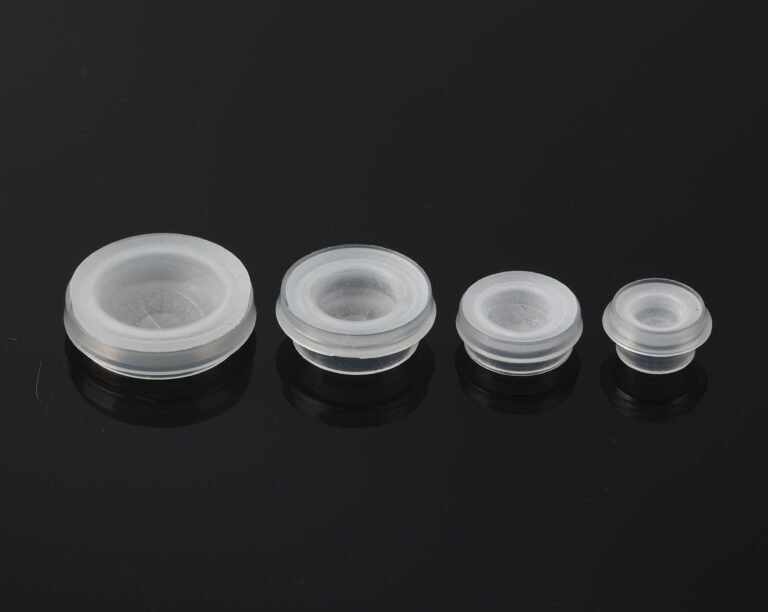
Yes. Common formats include flat slit valves, cross-slit valves, dome valves, and duckbill valves, in a wide range of diameters and heights. Slit length, membrane thickness, and flange design can also vary. The right combination depends on the closure design and the flow behavior you need.
Can a silicone valve work with both squeeze bottles and pump dispensers?
Valves are used in both, but they are not interchangeable between them. A squeeze bottle generates pressure through wall deformation, while a pump produces a more consistent pressure per stroke. Opening pressure has to be matched to whichever actuation method the package uses.
What silicone hardness is suitable for a soap dispenser valve?
Many dispensing valves fall in the range of roughly 30 to 60 Shore A, with softer grades used for thicker products and firmer grades where fast recovery and tight sealing matter most. Hardness alone does not determine performance. It works together with slit design and membrane thickness.
Can a manufacturer provide custom silicone valves for soap dispensers?
Yes. Custom tooling allows control over diameter, height, slit design, hardness, and opening pressure so the valve matches your specific bottle and formula. Custom parts require tooling cost and lead time, so they make the most sense when volumes justify the investment or standard valves cannot meet your requirements.
Alle ventiler på lager | hurtig levering
Få en gratis prøve nu
Klar til at blive sendt inden for 3 dage. Konkurrencedygtig pris. Gratis prøver til rådighed!
*Mindste ordremængde på 10.000 enheder.