Japanese
  English
  German
  Spanish
  Italian
  Russian
  Arabic
  Korean
  French
  Dutch
Dutch  Danish
  Norwegian
  Portuguese
  Turkish
  Czech
Czech  Lithuanian
  Polish
  Slovenian


Liquid Dispensing Valve Solutions for Controlled Flow Bottle Packaging
目次
If you have worked with cleaning liquids, air fresheners, or chemical sprays, you know how important the valve inside the cap is. It controls when the liquid comes out, how much comes out, and whether it drips after use.
At Xufu, we help global brands select and build the right liquid dispensing valve for their packaging. This article explains how these valves work, why some designs are better than others, and what to consider when choosing one.
Why Liquid Control Is Important for Cleaning Product Packaging
One of our customers makes household cleaning sprays. They had a problem: after each spray, liquid would drip from the nozzle. Bottles looked dirty. Customers complained.
The issue was not the formula. It was the liquid control valve inside the cap.
A good valve stops the flow right after dispensing. It keeps the bottle clean and prevents waste. In cleaning product packaging, this is not just about looks. It also affects safety and user trust.
If the valve leaks, people may think the product is low quality. That is why brands spend time finding the right bottle cap dispensing valve.
How a Dispensing Valve Controls Liquid Flow Inside Bottle Caps
ほとんどの場合 plastic bottle valve systems rely on pressure. When you press the cap, the valve opens. Liquid flows out. When you release, the valve closes.
But not all valves close the same way. Some leave a small gap. That is why you see dripping or uneven spray.
A liquid flow control valve must be precise. It should open only when needed and shut tightly after.
In one project, we worked with an air freshener brand. Their old valve gave too much liquid on the first press, then too little. We adjusted the internal structure and improved consistency.
The result was smoother spray and less waste.
関連記事
Key Factors to Consider When Selecting a Bottle Cap Valve
When you choose a bottle closure valve, think about these points: Liquid type: Water-based, alcohol, oil, or gel? Viscosity: Thin or thick? Dispensing style: Spray, drip, foam, or stream? Cap size: Does the valve fit your cap insert valve space? Pressure reducing valve for liquid bottle: Do you need to lower internal pressure to avoid leaks? One customer had a chemical liquid dispensing valve that worked in the lab but failed in real use. The issue was storage. Bottles were stacked and pressed. The valve opened under pressure. We added a stronger sealing structure and solved the problem. Small details like this matter when you scale production.
Liquid Type
Identify whether your product is water-based, alcohol, oil, or gel to match valve materials.
Viscosity
Thin or thick liquids require different valve orifice sizes and flow characteristics.
Dispensing Style
Choose between spray, drip, foam, or stream based on your product and user experience.
Cap Size Compatibility
Ensure the valve fits your cap insert space and closure dimensions.
Pressure Management
Consider a pressure reducing valve for liquid bottles to avoid leaks under stacking pressure.
Real-World Testing
Validate valve performance under real storage and shipping conditions, not just in the lab.
Stronger Sealing Structure
Enhanced sealing design prevents valve opening under stacking and storage pressure.
Scale-Ready Details
Small design details become critical when you move from samples to mass production.
Chamber Valve vs Ball Valve: Which Design Fits Your Application?
Many brands ask us: should we use a chamber valve または ball valve dispenser?
Both have their place.
A ball valve for liquid packaging uses a small ball to block or allow flow. It works well for simple on/off applications. But it can struggle with thicker liquids or when you need fine control.
A chamber valve uses an internal cavity to manage pressure and flow. It gives better control for sprays, foams, and gels.
One chemical brand came to us with a leaking issue. They were using a ball valve, but the liquid was too thin. It slipped past the ball. We switched to a chamber design with a シリコンディスペンサーバルブ insert. The leak stopped.
So the answer depends on your liquid and how you want it to dispense.
Why Silicone Dispensing Valves Are Suitable for Household Products
Silicone is soft, flexible, and durable. That makes it a good fit for household product packaging valve applications.
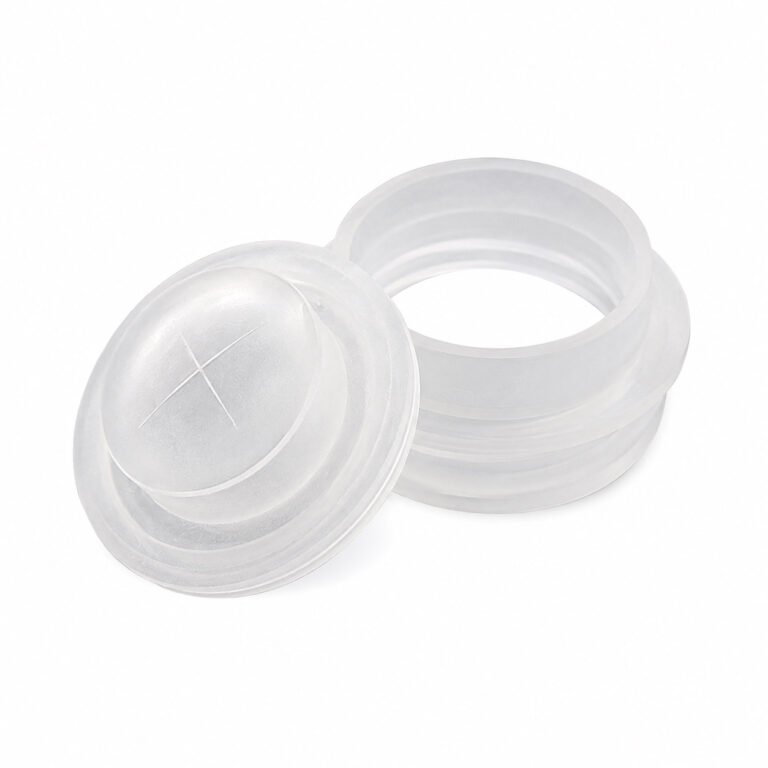
A シリコンディスペンサーバルブ can form a tight seal. It reacts well to pressure changes. It also resists many chemicals better than rubber or plastic.
We worked with a brand that makes disinfectant sprays. Their old valve became stiff after a few months. The spray became weak.
We replaced it with a one way dispensing valve made from silicone. It stayed soft, gave consistent spray, and did not react with the formula.
For brands that want long-term performance, silicone is often the better choice.
今度はあなたの番
ご注文はお決まりですか? お問い合わせ!
全バルブ在庫あり|短納期
今すぐ無料サンプルを入手する
3日以内に出荷可能。競争価格。利用できる試供品!
*最低注文数量 10,000台。